

Fiber is an important part of a balanced diet, yet many people do not get enough of it throughout the day.
It is often associated with digestive health, but fiber-rich foods can also help make meals more satisfying and support a more balanced eating routine.
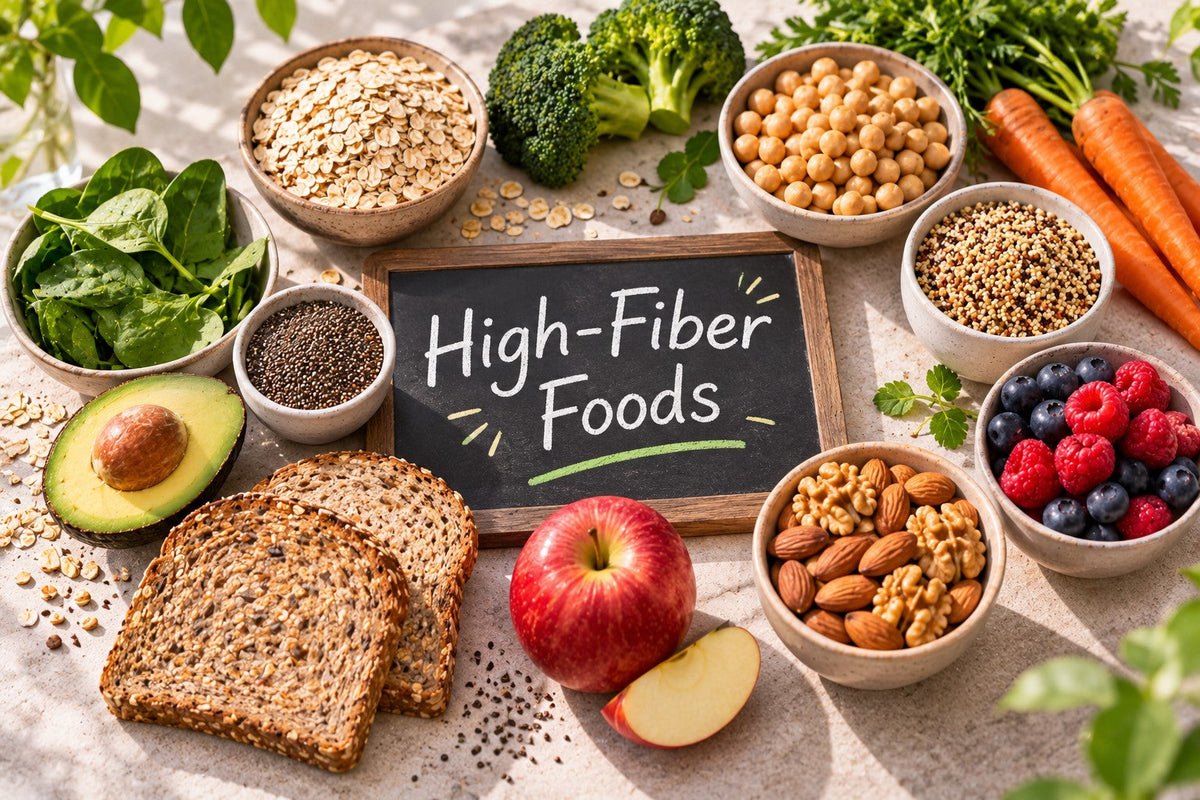
High-fiber foods are easy to find in everyday ingredients such as oats, fruit, vegetables, seeds, legumes, and whole grains.
You do not need to completely change your diet to eat more fiber. Small, consistent additions can make a meaningful difference.
What Is Dietary Fiber?
Fiber is a component of plant foods that is not fully digested in the same way as other carbohydrates.
There are two main types:
-
Soluble fiber, found in foods such as oats, fruit, and legumes.
-
Insoluble fiber, found in vegetables, whole grains, and some seeds.
You do not need to focus on only one type. Eating a variety of plant-based foods can help you get both.
Why Does Fiber Help with Fullness?
Fiber-rich foods often take longer to chew and digest than highly processed foods.
They can also add volume to meals, which makes them more satisfying, especially when fiber is paired with protein and healthy fats.
For example, oats topped with chia seeds, fruit, and nuts can be more filling than a breakfast based mainly on refined carbohydrates or added sugar.
Oats Are an Easy Source of Fiber
Oats are one of the simplest ways to add more fiber to your morning routine.
They can be combined with:
-
Fruit
-
Chia seeds
-
Nuts
-
Nut butter
-
Cinnamon
-
Yogurt or plant-based milk
In our store, you can choose oat-based options such as Apple Oat Meal and Banana Peanut Butter Oat Jar, combining oats with fruit, seeds, and other nourishing ingredients.
Chia Seeds Are a Small but Powerful Addition
Chia seeds are easy to add to many meals without dramatically changing the flavor.
Try adding them to:
-
Oats
-
Yogurt
-
Smoothies
-
Fruit bowls
-
Chia pudding
When paired with fruit and nuts, they can help create a more balanced and fiber-rich meal.
Our store also offers chia-based breakfast and snack options that make it easy to include this ingredient in your routine.
Fruit Is a Natural Source of Fiber
Fruit provides more than natural sweetness. It also contains fiber, vitamins, and a variety of plant compounds.
Good options include:
-
Apples
-
Berries
-
Strawberries
-
Pears
-
Oranges
-
Bananas
Whenever possible, eating whole fruit is a practical way to benefit from the fiber it naturally contains.
You can pair fruit with yogurt, oats, or nuts for a more balanced snack or breakfast.
Make Vegetables a Daily Habit
Vegetables are one of the easiest ways to increase fiber intake without making meals feel too heavy.
Try including a variety of colors and types such as:
-
Leafy greens
-
Carrots
-
Cucumber
-
Broccoli
-
Peppers
-
Cabbage
-
Avocado
In our store, you can choose from a variety of Salads and vegetable-based meals for a practical lunch or dinner option.
Legumes Provide Fiber and Plant-Based Protein
Chickpeas, lentils, beans, and peas are excellent sources of fiber and also provide plant-based protein.
They can be added to salads, used in main meals, or enjoyed in spreads such as hummus.
One convenient option from our store is Hummus & Arugula on Toast, which combines hummus and arugula in a simple breakfast or snack.
Nuts and Seeds Also Add Fiber
Nuts and seeds are known for their healthy fats, but they can also contribute fiber to your diet.
Examples include:
-
Almonds
-
Walnuts
-
Chia seeds
-
Flaxseeds
-
Pistachios
Our Almond & Flaxseed Crackers are another practical snack option and can be paired with hummus or avocado for a more substantial snack.
Choose Whole Grains More Often
Replacing refined grains with whole-grain options is one of the easiest ways to increase fiber intake.
Good choices include:
-
Whole-grain bread
-
Oats
-
Quinoa
-
Brown rice
-
Other whole grains
Toast can also become more balanced when paired with avocado, hummus, or nut butter rather than sweet spreads alone.
Simple Ways to Eat More Fiber
You do not need to overhaul every meal at once.
Try simple changes such as:
-
Add chia seeds to oats or yogurt.
-
Choose whole fruit instead of relying only on juice.
-
Add vegetables to lunch and dinner.
-
Include chickpeas or legumes in salads.
-
Snack on nuts or seed crackers.
-
Replace some refined grains with whole-grain alternatives.
Small changes are easier to maintain when they become part of your regular routine.
Increase Fiber Gradually
If your current diet is relatively low in fiber, increase your intake gradually.
Adding too much too quickly may lead to bloating or digestive discomfort for some people.
Drinking enough water is also important as you increase your fiber intake.
Example of a High-Fiber Day
A simple day could look like this:
Breakfast:
Oats with chia seeds, berries, and nuts.
Snack:
Apple with almond butter.
Lunch:
A salad with vegetables, chickpeas, and grains.
Afternoon Snack:
Almond & Flaxseed Crackers with hummus.
Dinner:
A meal with vegetables, legumes, or whole grains.
You do not need to follow this example exactly. The goal is to spread fiber-rich foods throughout the day rather than relying on one meal.
Make Fiber a Natural Part of Your Routine
Eating more high-fiber foods does not require a complicated diet.
Start with oats, fruit, vegetables, legumes, seeds, and nuts, and try to include more than one source throughout the day.
With options such as oat meals, chia-based dishes, salads, hummus toast, and almond and flaxseed crackers, it is easy to add variety while increasing your fiber intake.
A balanced, varied diet built around whole plant foods can make it easier to include more fiber naturally.
Explore More High-Fiber Choices in Our Store
If you want to make fiber-rich eating easier, explore our selection of oat meals, chia-based options, salads, hummus toast, and seed-based snacks.
These choices can help you add more variety to your daily routine while keeping meals practical, balanced, and enjoyable.


