

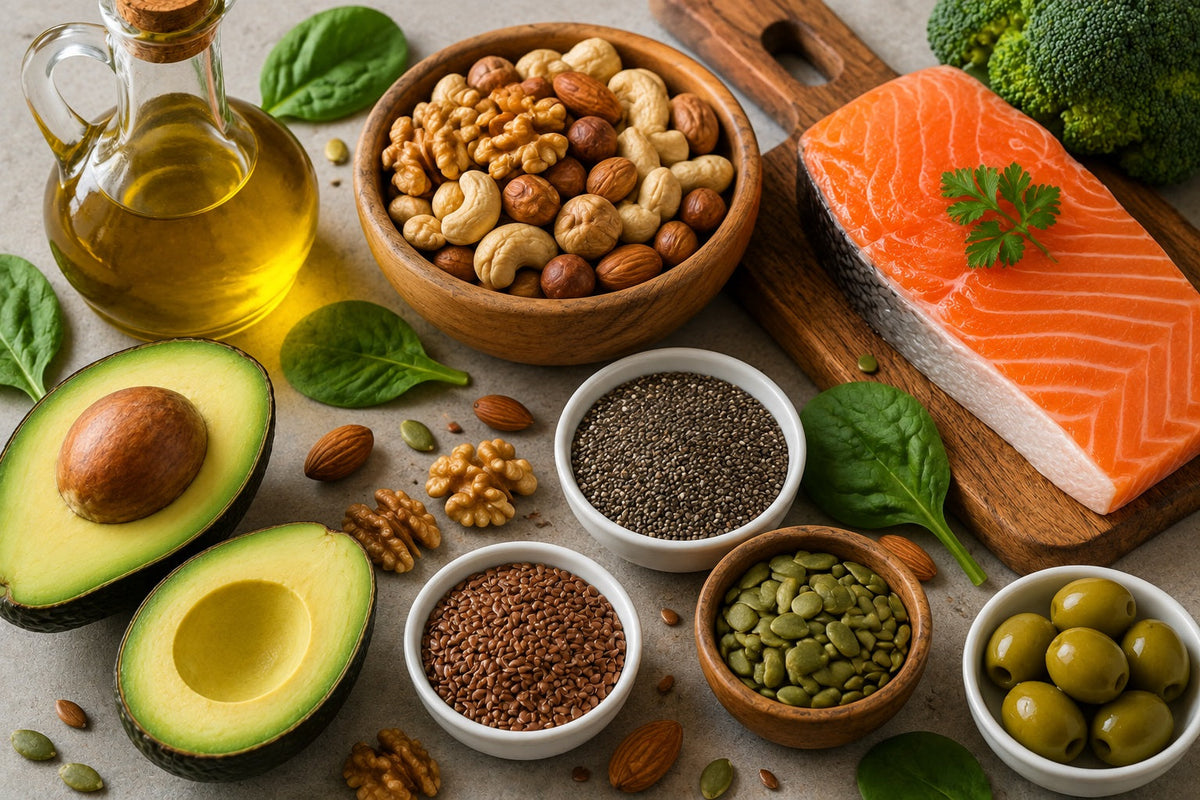
Healthy fats and your body are closely connected to balanced nutrition, weight management, and overall wellness. Fat is not something that should be completely eliminated from your diet. In fact, the body requires a certain amount of fat to perform many essential functions.
Dietary fats help the body absorb certain vitamins, support hormone production, provide energy, and contribute to normal cell function. Therefore, the main concern is usually excess body fat or consuming too many unhealthy fat sources rather than fat itself.
Maintaining a healthy body-fat level requires a combination of balanced nutrition, regular physical activity, and sustainable lifestyle habits.
What Happens When Body Fat Accumulates?
Excess body fat can affect appearance and physical fitness, but its impact may extend beyond these concerns.
High levels of certain types of fat, particularly visceral fat stored around internal organs, may be associated with increased health risks.
Some of the main types of body fat include:
- Subcutaneous fat.
- Brown fat.
- White fat.
- Beige fat.
- Essential fat.
- Visceral fat.
These types of fat do not all perform the same functions.
Essential fat, for example, is necessary for normal body function. Excess visceral fat, on the other hand, may present greater health concerns.
The goal should therefore not be to eliminate all body fat. Instead, focus on maintaining healthy fats while reducing excessive fat accumulation.
How Can You Maintain Healthy Body Fat?
There is no single eating plan that works for everyone. Healthy weight management does not necessarily require extreme restriction or eliminating entire food groups.
However, several practical habits can help improve diet quality and manage total calorie intake.
Follow a Balanced Eating Pattern
Start by reviewing both the quantity and quality of the foods you eat.
Try to build meals around a balanced combination of vegetables, protein sources, whole grains, and healthy fats.
Paying attention to portion sizes can also help reduce excessive calorie intake without following an overly restrictive diet.
There is no universal rule requiring everyone to eat exactly three meals per day. Meal frequency can vary depending on personal routines and preferences. What matters most is the overall quality and quantity of food consumed throughout the day.
Reduce Sugary Drinks and Fried Foods
Sugary soft drinks, sweets, and many fried foods can contain significant amounts of calories, added sugar, or fat.
Reducing these foods can make it easier to manage daily calorie intake and support weight-management goals.
However, this does not mean eliminating all dietary fats.
Unsaturated fat sources such as olive oil, nuts, seeds, and avocado can be part of a balanced diet. Since these foods are calorie-dense, portion size should still be considered.
Include Fruits and Vegetables
Vegetables and fruits are important parts of a balanced eating pattern because they provide fiber, vitamins, minerals, and beneficial plant compounds.
Healthy options can include:
- Apples.
- Oranges.
- Pomegranates.
- Bell peppers.
- Cucumbers.
- Arugula.
- Parsley.
- Cabbage.
- Onions and garlic.
Fiber-rich foods can help promote fullness and support normal digestive function.
Some fruits, including bananas, grapes, dates, and figs, naturally contain more carbohydrates or calories than certain other fruits. However, this does not mean they automatically cause body-fat gain.
They can still be included in a balanced eating plan in appropriate portions.
The same applies to avocado and nuts. They are valuable sources of healthy fats but are best consumed in sensible portions because they are calorie-dense.
Should You Avoid Eating Late at Night?
Eating a large or heavy meal immediately before going to bed can cause discomfort for some people.
For this reason, choosing a relatively light and balanced evening meal and allowing some time before sleep may be more comfortable.
However, weight management does not depend on the timing of one meal alone. Your overall calorie intake, diet quality, physical activity, and lifestyle habits are more important factors.
Exercise and Excess Body Fat
Physical activity plays an important role in maintaining fitness and supporting healthy weight management.
Useful activities include:
- Walking.
- Swimming.
- Cycling.
- Resistance training.
- Aerobic exercise.
- Football.
- Basketball.
Combining aerobic exercise with resistance training can help improve physical fitness while supporting muscle maintenance during weight loss.
Consistency is also more important than following an extremely demanding routine for only a short period. Choose activities that you can perform regularly and maintain over time.
The 12 Day Meltdown Program
Cleanse & Glow offers a structured 12-day nutrition program for people who want to organize their eating routine and follow a defined short-term nutrition plan.
The program includes a selection of juices, salads, and light meals designed to provide a more organized eating routine during the program period.
A structured nutrition program may help some people become more aware of their food choices, portion sizes, and daily eating habits.
However, weight-loss results vary between individuals depending on starting weight, activity level, calorie intake, lifestyle, and other personal factors.
Short-term programs should therefore be considered part of a broader healthy lifestyle rather than a replacement for sustainable nutrition habits.
Why Is a Balanced Diet Important?
A healthy eating pattern is not only about losing weight.
Providing your body with the nutrients it needs supports normal body functions and helps maintain daily energy and activity levels.
A balanced diet generally includes appropriate amounts of:
- Protein.
- Carbohydrates.
- Healthy fats.
- Fiber.
- Vitamins.
- Minerals.
Calorie and nutrient needs vary from person to person. For this reason, highly restrictive diets that eliminate entire food groups without a clear need are generally not the best long-term approach.
How Do Healthy Habits Support Weight Management?
Successful weight management is usually based on simple habits that can be maintained over time.
These habits may include eating balanced meals, paying attention to portion sizes, drinking enough water, and staying physically active.
Getting adequate sleep, maintaining a consistent eating routine, and reducing highly processed high-calorie foods can also support a healthier lifestyle.
Rather than focusing only on the number on the scale, it is useful to consider daily energy levels, physical fitness, diet quality, and your ability to maintain healthy habits over the long term.
Supporting Your Healthy Lifestyle
Cleanse & Glow provides a range of products and meal options that can be incorporated into a balanced eating routine depending on personal needs and goals.
The main idea is not extreme restriction. Instead, focus on choosing nutritious foods, controlling portions, remaining physically active, and developing habits that can be maintained over time.
When considering healthy fats and your body, remember that fat itself is not the enemy. The goal is to achieve balance between your body's nutritional needs, your food intake, and your daily activity level.
Change your food, change your life


