

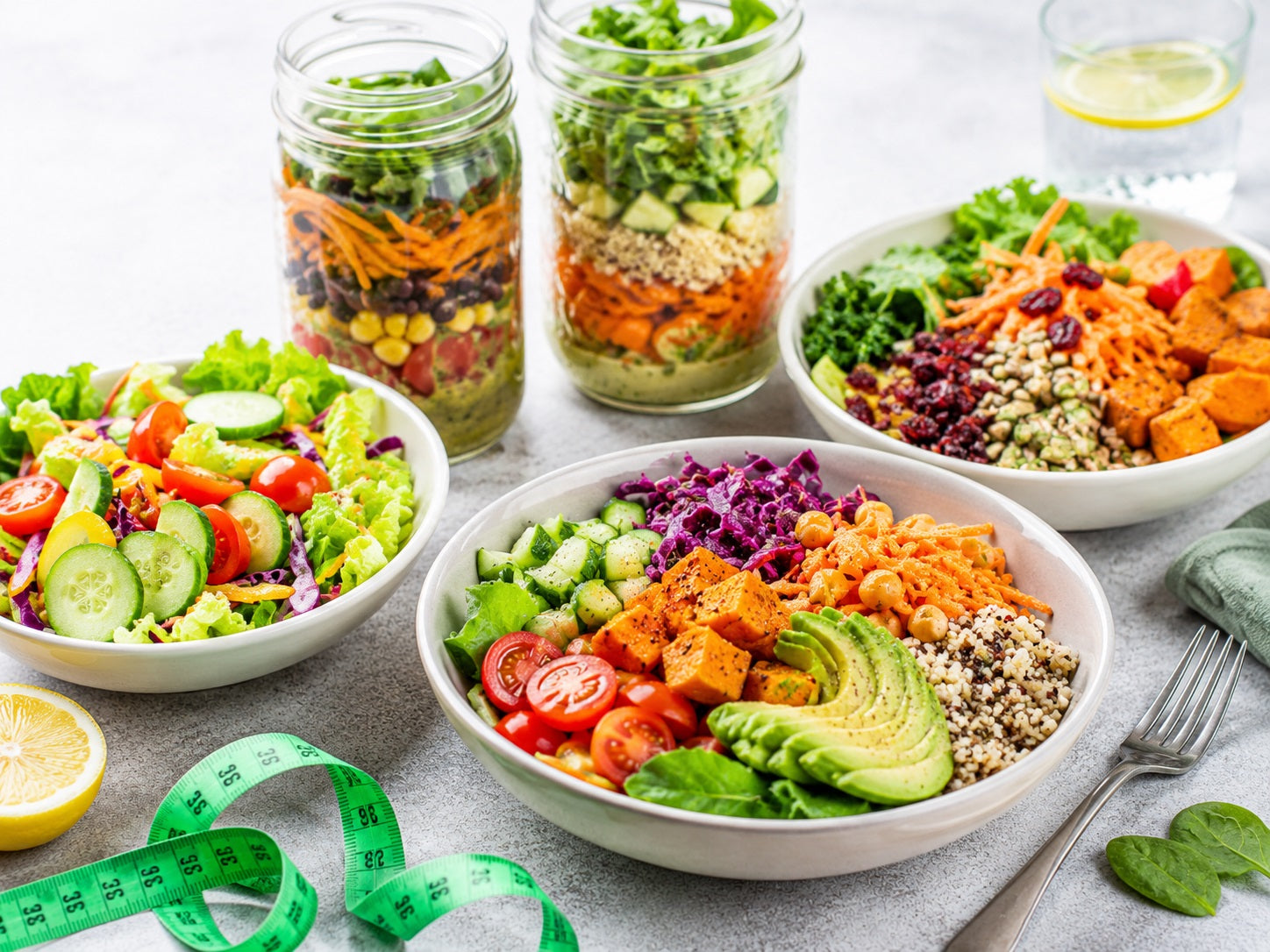
Salad benefits for weight loss are one of the main reasons salads have become a popular part of healthy eating plans. A well-prepared salad can provide vegetables, fiber, water, vitamins, and minerals while keeping calorie intake relatively moderate.
However, eating salad alone does not automatically lead to weight loss. The ingredients, portions, dressings, and overall diet all play an important role.
So, why is salad so strongly associated with dieting and weight management?
Why Is Salad Associated with Weight Loss?
Salads are commonly included in weight-loss diets because they are usually based on fresh vegetables.
Many vegetables have a low calorie density while providing plenty of water and dietary fiber. This means they can add volume to a meal without dramatically increasing its calorie content.
Fiber may also help you feel fuller for longer, which can make portion control easier throughout the day.
However, not every salad is automatically low in calories. Large amounts of creamy dressing, cheese, fried toppings, mayonnaise, or oil can significantly increase the total calorie content.
For this reason, a weight-loss-friendly salad should focus mainly on vegetables, with other ingredients added in balanced portions.
Health Benefits of Eating Salad
Salad can offer more than weight-management benefits. When prepared with a variety of vegetables and nutritious ingredients, it can become an important part of a balanced diet.
Helps You Feel Fuller
Many salad vegetables are naturally rich in water and fiber.
This combination adds volume to meals and may help improve satiety without adding excessive calories.
Eating a balanced salad alongside or before a main meal may therefore help some people manage their overall food intake more effectively.
Supports Digestive Health
Vegetables are an important source of dietary fiber, which supports normal bowel function and digestive health.
A diet containing enough fiber, together with adequate water intake, may also help maintain regular bowel movements.
Provides Vitamins and Minerals
The nutritional value of a salad depends on the ingredients used.
Colorful vegetables can provide nutrients such as vitamin C, folate, potassium, antioxidants, and a variety of beneficial plant compounds.
Using vegetables of different colors is a simple way to increase nutritional variety.
Salad Benefits for Dieting
A well-balanced salad combines fiber, volume, and moderate calories, making it particularly useful for people following a calorie-controlled eating plan.
Its fiber content can contribute to a longer-lasting feeling of fullness and may reduce the temptation to overeat higher-calorie foods.
Still, sustainable weight loss depends on your total calorie intake, eating pattern, physical activity, sleep, and lifestyle rather than any single food.
How to Make a Healthy and Filling Salad
A healthy salad should include a variety of ingredients rather than relying on only lettuce or one type of vegetable.
Start with leafy greens such as lettuce, spinach, or arugula. Then add vegetables such as cucumber, tomatoes, carrots, and bell peppers.
You can also improve the nutritional value and satiety of your salad by adding:
- A small portion of pumpkin, sesame, or sunflower seeds.
- Chia seeds or flaxseeds in moderate amounts.
- A quarter of an avocado for unsaturated fats.
- A protein source such as beans, chicken, eggs, or another suitable option.
- A moderate amount of olive oil or a light dressing.
Including a small amount of healthy fat may also support the absorption of certain fat-soluble vitamins and plant compounds.
Should You Avoid Oil in Salad When Dieting?
It is not necessary to completely eliminate fat from your salad.
Sources such as olive oil, avocado, nuts, and seeds can be part of a healthy, balanced diet.
The important factor is portion size because fat provides more calories per gram than carbohydrates or protein.
Using a small amount of olive oil can therefore be a better option than covering a salad with large quantities of creamy or high-calorie dressing.
Is Salad Alone Enough for Weight Loss?
Salad can support a weight-loss plan, but it is not a magic solution.
Sustainable results usually come from following a balanced eating pattern that provides adequate protein, carbohydrates, healthy fats, vegetables, and other nutrient-rich foods.
Physical activity, sleep quality, and everyday lifestyle habits are also important.
The ingredients you choose matter as well. A vegetable-rich salad with protein and healthy fats has a very different nutritional profile from a salad loaded with fried toppings, cheese, and high-calorie sauces.
Conclusion
Salad benefits for weight loss mainly come from its potential to provide vegetables, fiber, water, and valuable nutrients while helping you manage calorie intake.
For a healthier weight-loss salad, combine colorful vegetables with a source of protein and a moderate amount of healthy fats while limiting heavy dressings and high-calorie toppings.
Prepared this way, salad can become a practical, nutritious, and enjoyable part of a balanced lifestyle and sustainable weight-management plan.


