

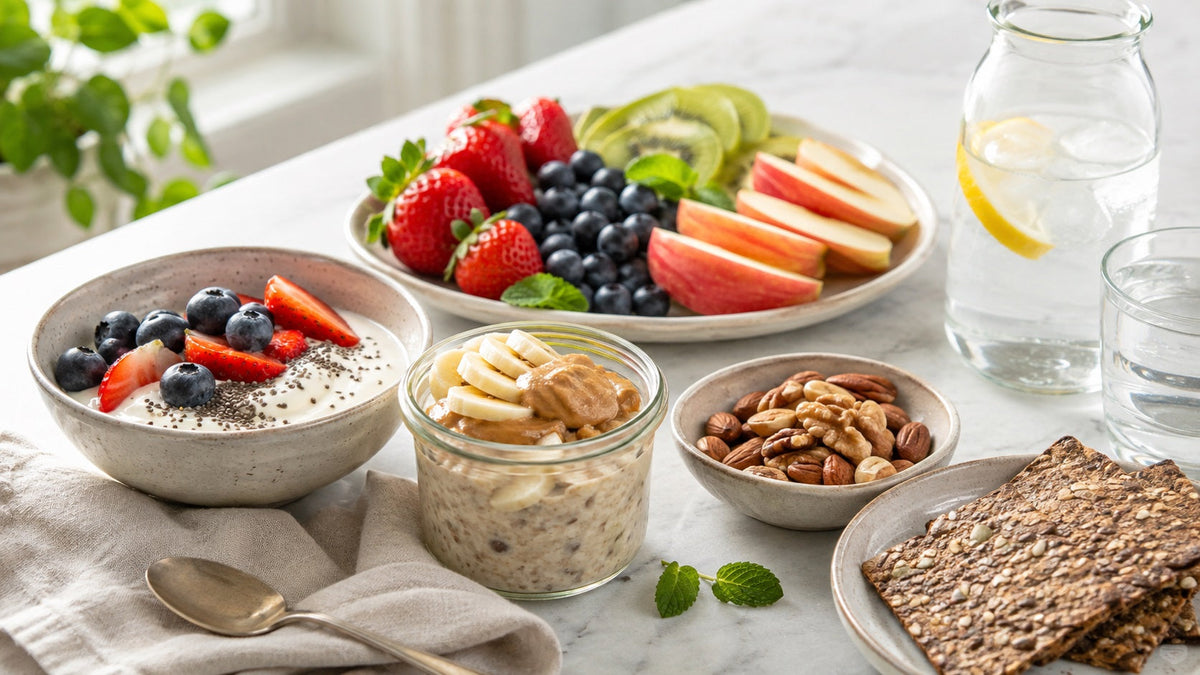
How to reduce sugar daily is a common question for anyone trying to improve their diet without following an overly restrictive plan.
Sugar does not come only from desserts, chocolate, or soft drinks. Added and free sugars can also appear in flavored drinks, breakfast foods, sauces, snacks, syrups, and products that may initially look like healthy choices.
The solution is not necessarily to eliminate every sweet-tasting food.
A more sustainable approach is to identify the biggest sources of sugar in your routine and gradually replace or reduce them.
The World Health Organization recommends keeping free sugar intake below 10% of total daily energy intake. Reducing it to 5% or less may provide additional health benefits. Free sugars include sugars added to foods and drinks as well as sugars naturally present in honey, syrups, fruit juices, and juice concentrates.
So, where should you start?
Where Is Sugar Hiding in Your Diet?
Understanding how to reduce sugar daily begins with identifying where your sugar is actually coming from.
Some sources are obvious.
Cake, candy, sweetened soft drinks, and desserts clearly contain sugar.
Other sources are less obvious.
A sweet coffee in the morning, flavored breakfast food, a sweet snack in the afternoon, and another sweetened beverage in the evening can quickly add up.
It is also important to distinguish between free sugars and sugars naturally contained within whole fruit and vegetables.
WHO recommendations on free sugar do not target the naturally occurring sugars inside whole fresh fruits and vegetables.
This means reducing sugar does not automatically mean avoiding fruit.
Instead, focus first on foods and drinks where sugar, syrup, honey, or fruit juice concentrates have been added or concentrated.
One useful question to ask before choosing a snack is:
Am I actually hungry, or am I simply used to eating something sweet at this time?
That small distinction can make everyday sugar reduction much easier.
Practical Ways to Reduce Sugar Every Day
Trying to remove all sugar overnight can make a new eating pattern difficult to maintain.
Small changes are usually more practical.
1. Start With Your Drinks
Drinks can be one of the easiest places to reduce sugar.
If you add sugar to coffee or tea, gradually reduce the amount rather than immediately removing it.
For example, move from two teaspoons to one and a half, then one, and eventually less if you are comfortable.
Make water your main everyday drink.
You can add lemon, mint, cucumber, or slices of fruit when you want more flavor.
The goal is to avoid needing an intensely sweet drink every time you feel thirsty.
2. Stop Making Every Snack Sweet
Many people automatically associate snacks with cookies, chocolate, or cake.
However, snacks can also be savory, protein-based, or built around nuts and seeds.
Cleanse & Glow currently offers several options in its Healthy Snacks range, including products such as Almond & Flax Crackers and other seed-based crackers. These can offer an alternative when you want something other than a conventional sweet snack.
The store also offers a Discovery Box containing granola, crackers, nut butters, and energy balls. The product is described by Cleanse & Glow as refined-sugar-free and made without several common additives.
The point is not to eat unlimited amounts of “healthy snacks.”
It is to give yourself more options so that sugar is not the default answer every time you become hungry.
3. Read Ingredients, Not Just Marketing Claims
A product labelled “healthy,” “natural,” or “vegan” is not automatically low in sugar.
Granola, energy bars, juices, oatmeals, and plant-based desserts can vary significantly depending on their ingredients.
Read ingredient lists and nutrition information whenever available.
Look for ingredients such as sugar, maple syrup, honey, rice syrup, corn syrup, and fruit juice concentrates.
This does not mean that any food containing one of these ingredients must be avoided.
It simply helps you understand how frequently sweeteners appear throughout your day.
4. Build a Less Sweet Breakfast
A very sweet breakfast can make sweetness feel like the default way to start your day.
Instead, build breakfast around foods such as oats, nuts, seeds, eggs, or yogurt while controlling the amount of sweet ingredients.
One example from Cleanse & Glow is the Banana Peanut Butter Oat Jar, made with rolled oats, banana, almond milk, chia seeds, and peanut butter.
It demonstrates a useful principle: ingredients such as banana can provide sweetness without making added table sugar the main source of flavor.
Portion size still matters, particularly when several naturally sweet ingredients are combined.
5. Choose Whole Fruit When You Want Something Sweet
Whole fruit can be a practical option when you want a naturally sweet snack.
Fruit contains naturally occurring sugars along with water, fiber, and other nutrients.
That makes it different from foods or drinks that receive most of their sweetness from added sugars.
Pairing fruit with Greek yogurt or a small serving of nuts can also create a more substantial snack.
6. Add Protein and Healthy Fats to Snacks
Sometimes sugar cravings happen because the food you ate earlier did not keep you satisfied for long.
Building a snack from several food groups can help make it more substantial.
For example, Greek yogurt can be combined with fruit and nuts.
Cleanse & Glow offers a Greek Yogurt Cup among its food options, and the store's nutrition content highlights Greek yogurt as a source of protein.
Nuts and nut butters can also be incorporated into snacks in sensible portions.
The purpose is to build a snack you actually find satisfying instead of repeatedly reaching for something sweet.
Are Dates and Honey Better Than Sugar?
This question often comes up when people begin reducing sugar.
Natural does not automatically mean sugar-free.
Honey and maple syrup still count as sources of free sugars under WHO definitions and should therefore contribute to your overall intake.
Whole dates are different because they are whole foods that also provide fiber and other nutrients.
However, portion size still matters.
For example, Cleanse & Glow offers Organic Stuffed Dates containing organic dates filled with peanut butter and tahini, together with some maple syrup and pistachios.
This can be enjoyed as a portion-controlled snack when you want something sweet, but it should not be viewed as unlimited simply because its ingredients are natural.
A useful rule is:
Natural does not mean sugar-free, and refined-sugar-free does not necessarily mean free from all sugars.
That distinction is especially important when shopping for healthy foods.
What About Juice?
Juice can contain nutrients from the fruit or vegetables used to make it, but it is not nutritionally identical to eating whole fruit.
WHO classifies sugars naturally present in fruit juice and fruit juice concentrate as free sugars.
Therefore, if your main objective is reducing daily sugar intake, juice should not replace water as your primary everyday drink.
Cleanse & Glow originally built its reputation around cold-pressed juices, but its current range extends to more than 200 products, including salads, breakfasts, soups, plant-based meals, oatmeals, and healthy snacks.
This gives customers options beyond juice when trying to create a lower-sugar daily routine.
What Should You Eat When You Crave Sugar?
When you want something sweet, you do not always need to fight the craving aggressively.
First, determine what is driving it.
If you are genuinely hungry, you may need a proper meal or filling snack rather than a small sweet.
Options might include whole fruit with nuts, Greek yogurt and berries, oatmeal with banana and peanut butter, or a small portion of a date-and-nut snack.
Cleanse & Glow also offers several Energy Balls and Protein Balls. Many use ingredients such as dates and nut butters, so they can provide a convenient snack while still requiring attention to portion size and ingredients.
Healthy ingredients do not make portion size irrelevant.
If your craving is mostly habitual—for example, always eating dessert immediately after lunch—changing the routine may be more effective than simply replacing one sweet product with another.
A Simple Lower-Sugar Day
A lower-sugar routine does not require a completely different lifestyle.
At breakfast, reduce the sugar added to coffee or tea and choose foods built around oats, eggs, Greek yogurt, nuts, or seeds.
Between meals, alternate sweet snacks with options such as nuts, crackers, yogurt, or protein-rich foods.
At lunch and dinner, prioritize meals based on vegetables, protein, and suitable carbohydrate sources rather than heavily sweetened sauces and sugary drinks.
When you want dessert, consider fruit or a smaller portion of your preferred snack instead of automatically choosing a large sweet serving.
These small decisions gradually reduce the number of times sugar appears throughout the day.
Final Thoughts
How to reduce sugar daily becomes much easier when you focus on repeated habits rather than trying to eliminate every sweet food at once.
Start with drinks, read ingredient lists, make water your main beverage, choose whole fruit more often than sweet drinks, and make sure not every snack is a dessert.
Most importantly, do not assume that terms such as “natural,” “healthy,” or “refined-sugar-free” mean that a product contains no sugar at all.
Cleanse & Glow offers oat-based breakfasts, Greek yogurt, crackers, nuts, snacks, and other food options that can fit into a diet that relies less heavily on added sugar when chosen according to your individual needs.
The goal is not to build a diet with absolutely no sweet taste.
It is to make highly sweetened foods an occasional part of your routine instead of the foundation of it.


