

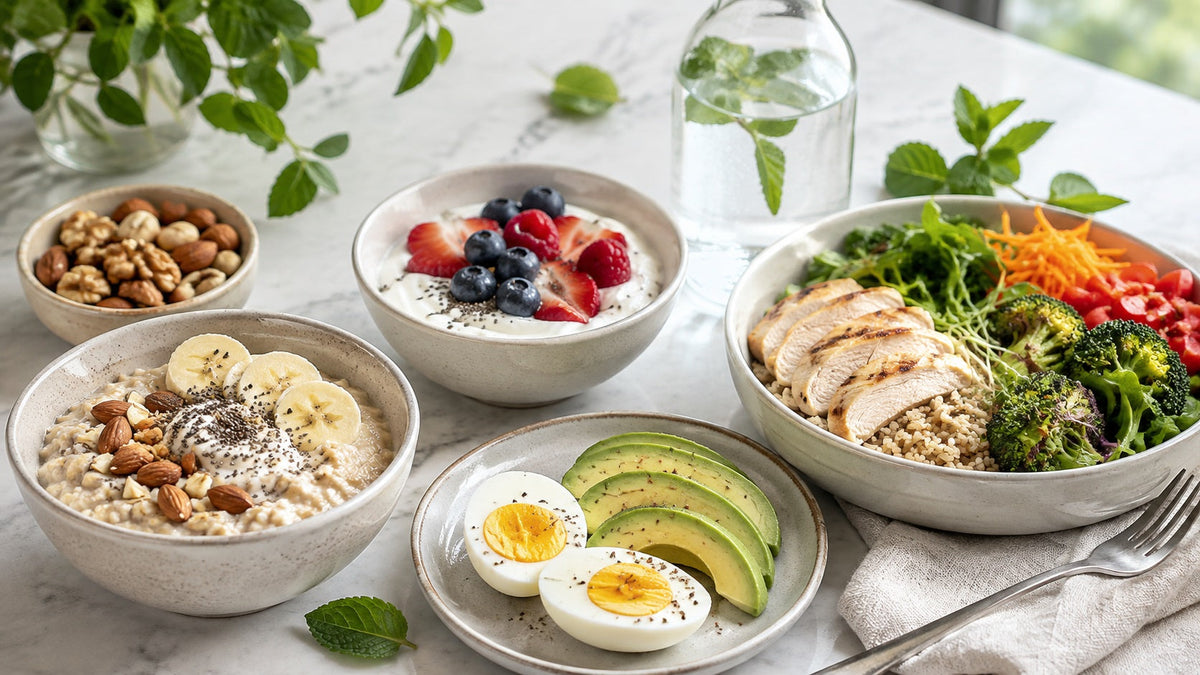
Why do you get hungry quickly? You may finish a meal feeling satisfied, only to find yourself searching for another snack an hour or two later.
Sometimes the issue is simply that you did not eat enough.
But often, the composition of the meal matters just as much as its size.
Two meals can provide similar amounts of energy while producing very different experiences of fullness depending on their protein, fiber, fat, volume, and overall food composition.
Meal timing, eating habits, and the types of snacks you choose throughout the day can also influence how hungry you feel.
So if you regularly think, “Why am I hungry again already?”, it may be useful to look at what is on your plate, not only how much food you are eating.
Why Are You Hungry Soon After Eating?
Hunger is a normal biological signal.
Feeling hungry again relatively soon after a meal can, however, sometimes indicate that the meal did not provide enough volume, protein, fiber, or total food for your individual needs.
Your Meal May Be Low in Protein
Protein is one dietary component that may contribute to feelings of fullness.
Research examining higher-protein diets has found that some participants report greater fullness or satiety, although responses vary and protein is not a universal appetite-control solution.
In practical terms, a breakfast based mainly on a sweet drink and pastry may feel very different from one containing eggs, Greek yogurt, or another protein source.
You do not need to make every meal extremely high in protein.
Instead, consider whether your main meals contain a recognizable source of protein.
You May Not Be Eating Enough Fiber
Fiber is naturally found in foods such as oats, whole grains, vegetables, fruits, legumes, nuts, and seeds.
Research suggests that the effect of fiber on appetite depends partly on the type of fiber consumed. Recent evidence indicates that higher intakes of some cereal fibers, particularly from oats and rye, may improve certain measures of satiety compared with lower-fiber meals.
This does not mean fiber automatically eliminates hunger.
It means that building meals around whole foods containing fiber can contribute to a more substantial eating pattern.
Your Meals May Simply Be Too Small
Another common problem is replacing meals with very small snacks.
A snack may temporarily reduce hunger, but it is not always large enough to function as a full meal.
If your next meal is coming soon, this may not matter.
But if you repeatedly eat tiny snacks instead of a substantial meal and then become hungry again shortly afterward, it may be worth reviewing your portion sizes and meal structure.
How to Build a More Filling Meal
Instead of searching for one “appetite-suppressing” food, build a balanced meal.
A useful framework is:
Protein + fiber-rich foods or vegetables + an appropriate carbohydrate source + a moderate amount of fat.
Not every meal needs to follow this formula exactly, but it helps explain why some meals are more satisfying than others.
Start With Protein
Protein can come from eggs, chicken, fish, tuna, Greek yogurt, legumes, or plant-based protein foods.
Cleanse & Glow currently has a dedicated Protein collection that includes options such as Boiled Egg, Tuna in Brine, Greek Yogurt Cup, and Grilled Chicken Cubes.
For example, according to the store's current description, a 70 g serving of Grilled Chicken Cubes provides 24 g of protein.
Rather than eating the chicken by itself, it can be added to a salad, grain bowl, or another meal to create a more complete plate.
Add Vegetables or Whole Grains
Next, think about foods that provide fiber and volume.
Vegetables are one of the easiest additions, while oats, brown rice, whole grains, and legumes can also contribute depending on the meal.
One example from Cleanse & Glow is the Grilled Chicken Bowl, which combines grilled chicken with sautéed vegetables and brown rice.
It illustrates the difference between eating a single protein source and building a meal from several food groups.
Include Fat in Sensible Portions
Nuts, seeds, avocado, and nut butters can all be part of a balanced meal.
However, they are energy-dense foods, so portion size still matters.
A small portion of nuts added to yogurt or oatmeal can be useful, but “healthy fat” does not mean unlimited quantities.
The objective is balance.
What Should You Eat for Breakfast to Stay Full Longer?
Breakfast is a useful example of how meal composition can influence hunger.
Someone who starts the day with coffee and a sweet pastry may experience a different level of fullness from someone eating oats, seeds, nuts, yogurt, or eggs.
Cleanse & Glow offers a Banana Almond Oat Meal, built around oats with banana, almond milk, chia seeds, almonds, almond butter, and other ingredients.
This type of meal demonstrates how several components can be combined instead of relying on a single source of quick energy.
Another option is the store's Greek Yogurt Cup.
Cleanse & Glow describes it as high in protein and suggests pairing it with fruit and nuts, making it easy to turn a small item into a more substantial snack or breakfast.
Why Do You Get Hungry After Eating Sweets?
Sweet foods are not guaranteed to make every person hungry immediately afterward.
Appetite regulation is more complicated than that.
However, many small sweets or highly processed snacks provide energy without necessarily providing much protein, fiber, or meal volume.
If a snack is small and primarily designed to taste sweet, it may simply not function as a satisfying meal.
The more useful question is:
Am I choosing this snack because I want the taste, or because I am genuinely hungry?
If you are truly hungry, you may need something more substantial.
Greek yogurt with fruit and nuts, eggs with vegetables or crackers, tuna with a small salad, or oatmeal with seeds can all be examples of more complete snacks.
Can Oats Help With Fullness?
Oats contain a soluble fiber known as beta-glucan.
Research has examined how the viscosity and other properties of beta-glucan may influence satiety signals.
A 2026 systematic review also found that higher cereal-fiber intake generally had favorable effects on satiety measures, with oat and rye fibers showing stronger effects on appetite than several other cereal-fiber sources.
This makes oats a practical breakfast or snack option, particularly when combined with protein, nuts, or seeds.
Cleanse & Glow currently has dedicated collections for Oat Jars and Oat Meals, alongside its meal, snack, and protein categories, allowing customers to combine different types of foods rather than relying on one small snack.
What Should You Eat Between Meals?
There is nothing wrong with having a snack if you are genuinely hungry.
The key is matching the snack to your level of hunger.
If your next meal is close, fruit, yogurt, or a small portion of nuts may be enough.
If you still have several hours before your next meal, consider something containing more than one food group.
For example:
Greek yogurt with fruit and nuts.
A boiled egg with vegetables or crackers.
Tuna with crackers or a small salad.
Oatmeal with seeds and nuts.
The best snack is not necessarily the one with the fewest calories.
It is the one that fits your nutrition needs and prevents you from repeatedly grazing on foods that never feel satisfying.
What About a High-Protein Meal Plan?
For people who struggle to organize meals throughout the day, a structured plan can sometimes provide convenience.
Cleanse & Glow offers The High Protein Plan, which currently includes a protein drink, protein-rich salad, meal, breakfast, soup, and snack.
According to the product description, the plan provides approximately 70–90 g of protein per day and between 1,300 and 1,700 calories, depending on the specific plan.
The relevant point here is not that a protein program “stops hunger.”
Rather, it illustrates how organizing the day around structured meals and snacks containing protein and fiber can be different from relying on random snacks whenever hunger appears.
Individual protein and calorie needs vary considerably, so a pre-designed program should still be selected according to personal requirements.
Everyday Habits That May Affect Hunger
Food composition is only part of the picture.
Eating very quickly can make it harder to pay attention to fullness developing during a meal.
Waiting extremely long periods between meals may also leave some people excessively hungry by the time they eat again.
Similarly, grazing continuously throughout the day can make it difficult to distinguish genuine hunger from routine eating.
Try slowing down during meals and creating more clearly defined meals, then use snacks when they are actually useful.
Final Thoughts
Why do you get hungry quickly? The answer is not always that you lack willpower or need to eat enormous portions.
Sometimes your meals simply contain too little protein or fiber, are too small for your needs, or rely heavily on foods that do not keep you satisfied for long.
Start by including a protein source, then add vegetables or fiber-rich foods, an appropriate carbohydrate source, and a sensible amount of healthy fats.
From oats and Greek yogurt to chicken, eggs, tuna, vegetables, and whole grains, there are many ways to create meals that feel more substantial.
Cleanse & Glow offers oat-based breakfasts, meals, snacks, and individual protein options that can fit naturally into this approach.
The goal is not to eliminate hunger—hunger is a normal signal.
The goal is to build meals that make it easier to move comfortably from one meal to the next without constantly searching for something else to eat


