

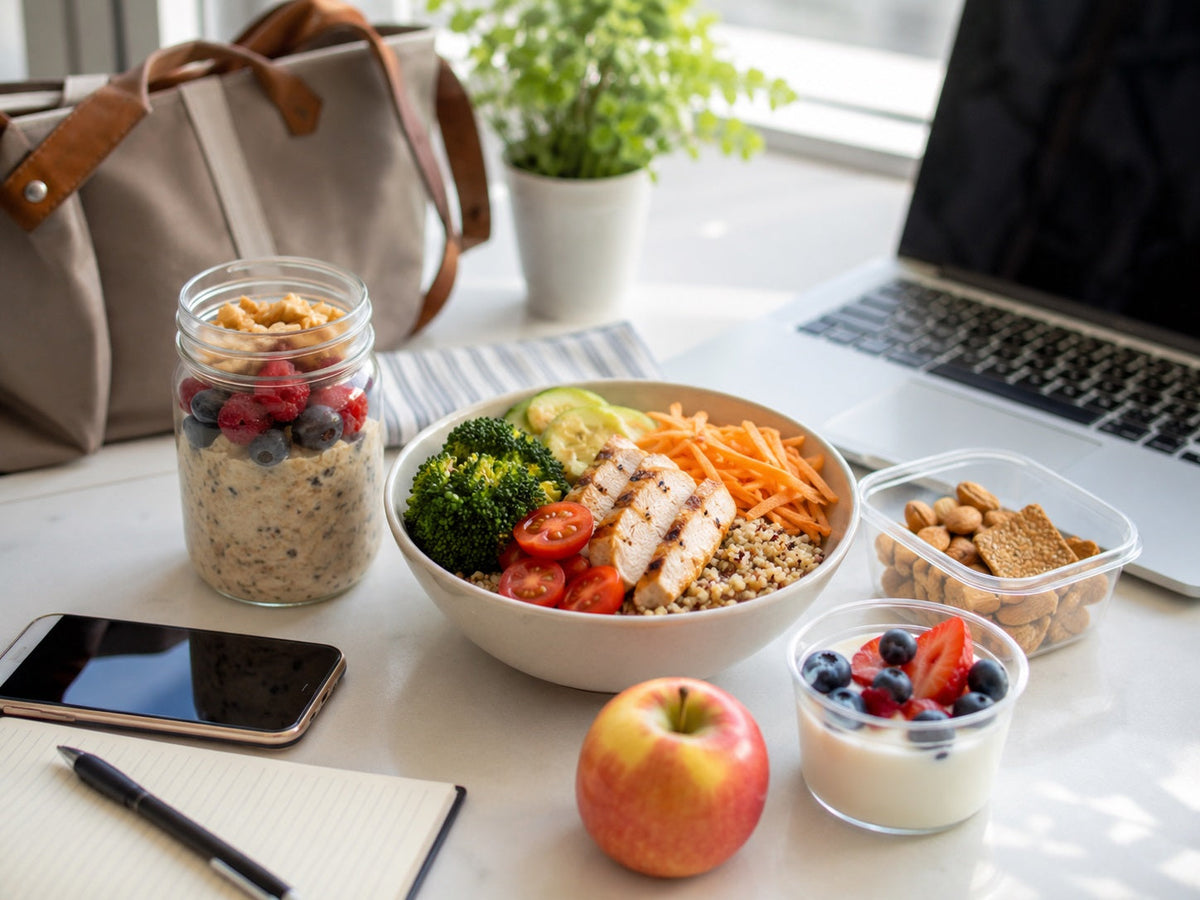
Healthy meals for busy days can feel difficult when your morning starts early, your schedule fills with meetings and errands, and you suddenly realize halfway through the day that you never planned what to eat.
At that point, the fastest option often becomes the easiest one.
You may order fast food, grab something sweet with coffee, skip lunch altogether, or wait until you are extremely hungry in the evening.
Healthy eating, however, does not always require hours of cooking.
For many people, the real challenge is not a lack of healthy foods. It is the lack of a simple plan.
When you already know what you can eat for breakfast, what snack you can carry, and what your lunch option will be, staying consistent becomes much easier—even on a demanding day.
Why Does Healthy Eating Become Harder When You Are Busy?
Food is often one of the first things to become an afterthought when the day gets hectic.
You may start with coffee, delay breakfast, work through lunch, and eventually reach a point where you are too hungry to think carefully about your next meal.
The priority changes from:
“What would be a balanced meal?”
to:
“What can I eat immediately?”
The solution is not necessarily carrying six meal-prep containers everywhere you go.
Instead, make the healthier option the most convenient option available to you.
A simple starting point is to have three things covered:
A quick breakfast.
An accessible snack.
A clear plan for your main meal.
Do Not Wait Until You Are Extremely Hungry
Long gaps without food are not automatically a problem for everyone.
However, if you know that you tend to become very hungry during a long workday, having food available can help you avoid making every decision at the last possible minute.
The goal is not to eat constantly.
It is to plan around your schedule and your actual hunger.
Keep Meals Balanced, Not Complicated
A healthy meal does not need a long ingredient list.
Think about four basic components:
Protein + vegetables or fruit + an appropriate carbohydrate source + a reasonable amount of healthy fat.
Examples can be very simple:
Chicken with rice and vegetables.
Greek yogurt with fruit and nuts.
Oats with seeds and nut butter.
Eggs with toast and vegetables.
Simple meals like these can be far more practical on a busy day than trying to survive on coffee, sweets, and a series of small snacks.
Quick Breakfast Ideas for Busy Mornings
Breakfast is often the first meal to disappear when mornings become busy.
If you are hungry in the morning, having a ready-to-eat option can make the difference between eating something balanced and waiting several hours for your next opportunity.
Ready-to-Eat Oats
Oats work particularly well for busy schedules because they can be prepared in advance, transported easily, and combined with many different ingredients.
One current option from Cleanse & Glow is the Protein Oat Jar.
It contains rolled oats, dates, almond milk, plant-based protein powder, raw cacao, chia seeds, almond butter, and berries.
This kind of meal fits a busy routine because it can function as breakfast or a substantial snack without requiring preparation at the moment you want to eat.
Instead of making coffee your entire breakfast, you have several food components together in one container.
Breakfast That Is Already Prepared
Cleanse & Glow also offers Banana Protein Pancakes, served with maple syrup and a superseed mix. The store describes them as a breakfast containing protein, fiber, and fats.
Other breakfast choices currently include avocado toast, tuna toast, Greek yogurt and zaatar toast, peanut butter and banana toast, and several other options, with some products available only in Riyadh.
You do not need the same breakfast every day.
The useful strategy is to create a short list of breakfasts you can choose without thinking too much.
A Healthy Lunch When You Have No Time to Cook
Lunch is often where a busy-day eating plan falls apart.
You may be at work, university, in the car, or moving between appointments with little time to prepare food.
Instead of looking for a perfect meal, use a quick checklist.
Look for:
A clear source of protein.
Vegetables.
An appropriate carbohydrate source.
Reasonable sauces and extras.
Choose a Complete Meal Instead of Grazing
One current option from Cleanse & Glow is the Grilled Chicken Bowl, listed among its protein and meal offerings.
A full bowl can be more practical than attempting to create lunch from several small snacks.
The store also offers individual protein additions such as Grilled Chicken Cubes, Tuna in Brine, Boiled Egg, and Greek Yogurt Cup.
These are useful when you already have a salad or another meal and simply need to make it more substantial.
This creates an effective busy-day rule:
You do not always need to replace your meal. Sometimes you only need to improve it.
Add protein to a salad.
Pair a light soup with something more substantial.
Keep a planned snack available if lunch is smaller than usual.
What Should You Carry as a Snack?
A useful snack solves one problem: it helps bridge the gap when your next meal is still several hours away.
It does not always need to be sweet.
Practical options may include:
Greek yogurt.
A small portion of nuts.
Fruit.
A boiled egg.
Crackers paired with tuna or cheese.
A ready-to-eat oat jar.
Cleanse & Glow currently sells a Greek Yogurt Cup, boiled eggs, and tuna within its protein range.
Greek yogurt can also be paired with fruit or nuts if you need a larger snack.
The key is accessibility.
A realistic snack sitting in your work fridge or bag is usually more useful than a perfect nutritional plan you cannot follow.
Prepare Once, Eat More Than Once
If you prefer preparing food at home, you do not have to start from zero every day.
Prepare versatile ingredients that can work across several meals.
For example:
Cook enough chicken for several portions.
Prepare rice or grains in advance.
Wash vegetables.
Portion nuts into smaller servings.
Prepare overnight oats before bed.
Your next meal then becomes an assembly task rather than a full cooking session.
Meal preparation should also remain realistic.
If cooking seven completely different meals every Sunday makes you abandon the routine within two weeks, simplify it.
Prepare only the components that normally take time away from your weekday schedule.
Build a Food Backup Plan
Busy days do not always follow your calendar.
A meeting may run late.
You may stay outside the house longer than expected.
Travel can interrupt your usual routine.
Having a backup plan can therefore be extremely useful.
Your work drawer may contain appropriate shelf-stable foods such as nuts or crackers.
Your fridge can hold Greek yogurt or a ready meal.
Even knowing in advance where you can order a balanced meal from can be part of your strategy.
Cleanse & Glow currently offers more than 200 products across salads, breakfasts, soups, plant-based meals, oatmeal, snacks, and other categories, giving customers more alternatives when they do not want to default to conventional fast food.
What If Every Day Is Busy?
Sometimes the issue is not one chaotic day.
It is an entire week of deadlines, meetings, commuting, or travel.
At that point, planning every meal individually can become another task on your list.
A structured meal program can be an option for people who value convenience.
Cleanse & Glow currently offers The High Protein Plan for 1, 5, 7, or 10 days.
According to the store, each day includes a protein drink, protein-rich salad, meal, breakfast, soup, and snack, providing approximately 70–90 grams of protein per day.
Another option is the Eat, Cleanse & Glow Program, which is built around six meals per day and can be ordered for several different durations.
These programs are not required for healthy eating.
Their main practical benefit for a busy person is that they can reduce the number of food decisions that must be made throughout the day.
Individual calorie, protein, and dietary requirements vary, so any structured program should still be selected according to personal needs.
Example of a Healthy Busy Day
A realistic day does not need to look complicated.
Breakfast:
An oat jar containing oats, protein, seeds, and fruit.
Mid-morning:
Coffee or tea, with yogurt or fruit if you become hungry.
Lunch:
Chicken with vegetables and rice or another grain.
Afternoon:
A portion of nuts or another practical snack if dinner is still several hours away.
Dinner:
Soup with a protein source, a complete salad, or a simple home-cooked meal.
Notice what is missing:
Complex recipes.
Long cooking sessions.
Perfect meal timing.
The goal is simply to have a clear and convenient option available for each part of your day.
Five Rules for Healthy Eating on Busy Days
First, avoid waiting until you are extremely hungry before deciding what to eat.
Second, prepare at least one meal or food component in advance. Breakfast is often the easiest place to start.
Third, keep one practical snack within reach.
Fourth, choose proper meals containing protein and vegetables rather than relying on several tiny snacks as your entire food intake.
Fifth, do not expect every day to be perfect.
If one meal does not go according to plan, the day is not ruined.
Simply return to your usual choices at the next meal.
Final Thoughts
Healthy meals for busy days do not require hours of cooking or a complicated nutrition schedule.
The key is reducing the number of food decisions you have to make while you are both busy and hungry.
Prepare a quick breakfast, keep a practical snack nearby, choose main meals with a clear protein source and vegetables, and prepare a few ingredients in advance whenever possible.
On days when food preparation is not realistic at all, ready-to-eat options such as oats, Greek yogurt, chicken bowls, salads, and structured meal programs can make a balanced choice easier.
Cleanse & Glow offers several options that fit this type of routine, from Protein Oat Jar and Greek Yogurt Cup to Grilled Chicken Bowl and structured daily or weekly meal programs.
Ultimately, the best nutrition plan for a busy schedule is not the most elaborate one.
It is the one you can still follow when your day does not go exactly as planned.


